


Alopecia X, Explained
Is your dog losing fur but not scratching?
Alopecia X is a condition in which a dog’s coat thins and stops growing back, usually in a matching pattern on both sides of the body. It mostly affects plush-coated breeds like the Pomeranian.
Here is what it looks like, what it is often mistaken for, what vets may try, and what living with it means.
The short version
A coat problem, not a sickness
The cause still isn’t fully understood — that is what the X stands for. Sex hormones may play a role, but that hasn’t been proven.
Plush-coated breeds — Pomeranians, Chow Chows, Keeshonden, Samoyeds, Alaskan Malamutes, Siberian Huskies — and Poodles
Usually in young adulthood. Males and females, neutered or not
Usually not. On its own it rarely causes itching or redness
No. It is mainly cosmetic and not expected to shorten a dog’s life
No
Black skin disease, coat funk, hair cycle arrest
How it usually progresses
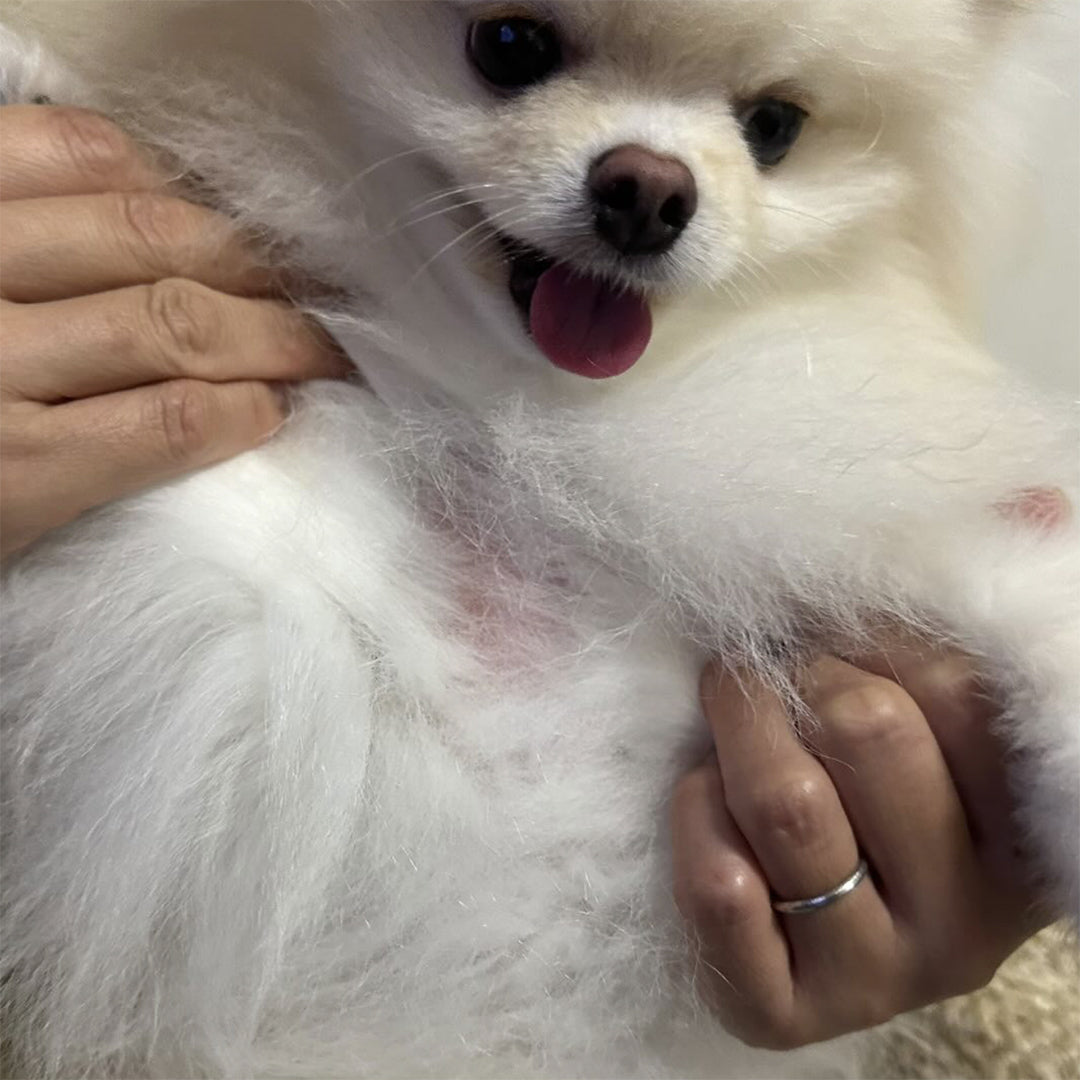
1. The coat thins
The outer guard hairs go first. What’s left can look dull, dry or fuzzy — part it and you may see skin.

2. Bare patches appear
Loss shows on the flanks and in areas that rub, then spreads to the neck, the rear, the backs of the thighs and the tail — usually matched on both sides.
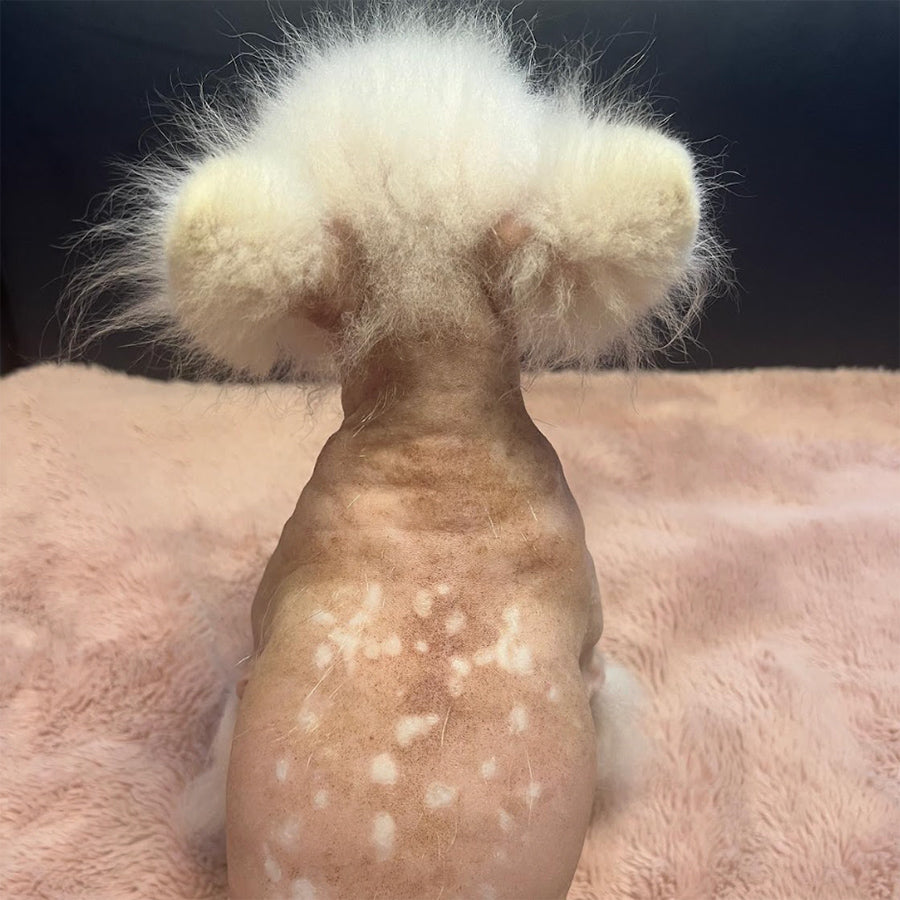
3. The body goes bare, the head stays full
In time the trunk can lose most of its coat while the head and lower legs keep theirs. The bare skin often darkens — hence the name black skin disease.

It is usually not itchy — and that’s a clue
A dog with Alopecia X alone is losing coat but is otherwise comfortable. It doesn’t usually cause itching, redness or irritation.
Allergic skin works the other way around: it is itchy first, and the hair comes out because the dog scratches. So if you are seeing redness, sores or constant scratching, something else may be going on too — and it can sit alongside Alopecia X.
Look-alikes
What it is often mistaken for
The hair loss can look a lot like other conditions — some of them hormone problems that do need treatment. That is why a vet rules these out before calling it Alopecia X.
An underactive thyroid gland. Checked with thyroid blood tests
The body makes too much cortisol. Checked with adrenal function tests
Bacteria or yeast. Checked by looking at skin cells under a microscope
Mites. Checked with skin scrapings
Usually itchy and red first — Alopecia X on its own usually isn’t
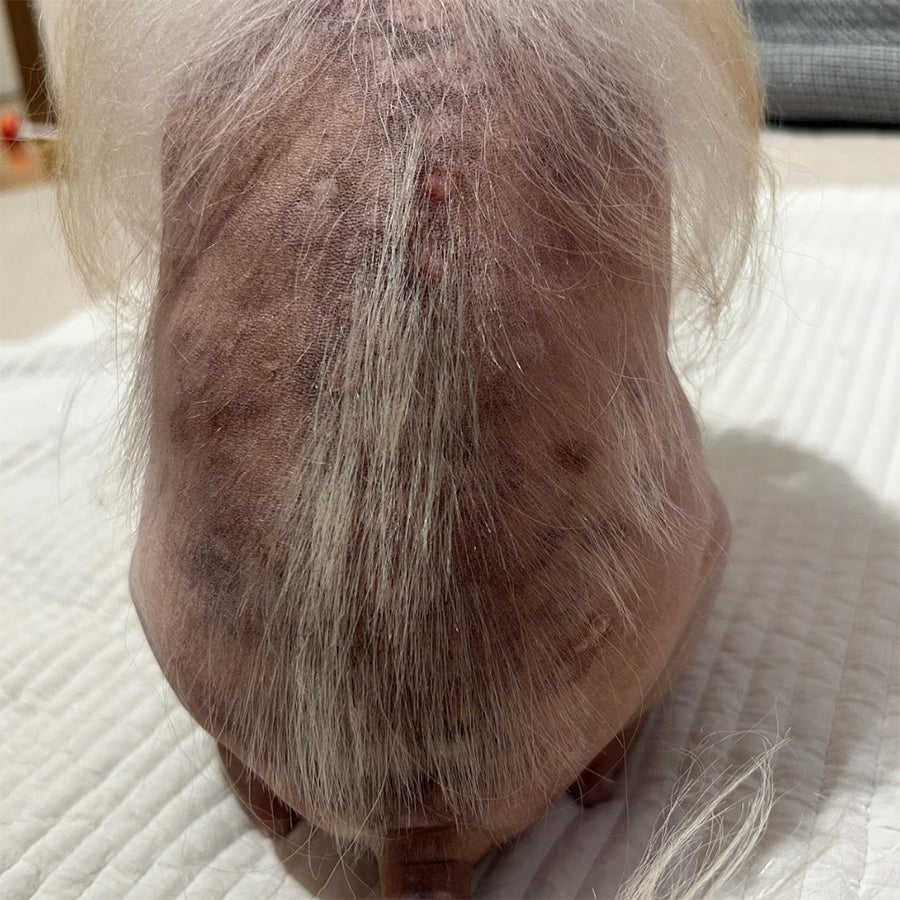
At the vet
How it’s diagnosed, and what vets may try
There is no single test for Alopecia X. A vet usually suspects it from the pattern, the breed and the age, then rules other causes out — blood work, thyroid and adrenal tests, skin cytology and scrapings. A skin biopsy can support it, but can’t confirm it on its own.
What vets may suggest, depending on the dog:
- Spaying or neutering — often the first step for intact dogs.
- Melatonin — helps some dogs regrow hair. Only as your vet directs: some human formulas contain xylitol, which is toxic to dogs.
- A hormone implant — for some intact males.
- Microneedling — done under anesthesia.
- Stronger hormone medicines — with more serious side effects and regular blood tests.
None of these works for every dog, and a coat that grows back can be lost again. Because the condition is cosmetic, some owners choose simply to monitor it.

Day to day
Living with Alopecia X
Most dogs with it are comfortable, active and entirely themselves. It isn’t painful, isn’t contagious and isn’t expected to shorten a dog’s life.
The bare skin has lost its natural cover, though. One owner in our monitor group found frequent sunburn and small scrapes on their dog’s bare patches — worth keeping in mind on sunny walks.
Getting the diagnosis right still matters, because the conditions it is confused with are not harmless.
One dog’s record: six months

Where he started
Baku, a Pomeranian with Alopecia X. His back and sides are bare, with darker skin along the spine — while his head and ruff keep their coat. His family started him on one MIRANEST Jelly Stick a day.

One month
Little visible change yet.

Two months
Dark new hair is starting to show along his back.

Three months
More of his back is covered, though it is still patchy.

Six months
His back and sides are covered again.
One dog over six months. Individual results vary.
Started seeing regrowth of fur on my Pomeranian with alopecia. Started slowly, but has steadily gotten better

Honest expectations
Will the coat grow back?
In our 2023 monitor study, 93% of owners (197 of 211) saw an improvement within 30 days — across skin and coat concerns, not Alopecia X alone. Individual results vary: no treatment works for every dog, and a coat that grows back can be lost again later.
So see your vet first to rule other causes out, then choose care you can keep up with every day — alongside your vet’s plan, not instead of it. Rin’s owner wrote up her first month plainly, including the parts that hadn’t changed yet.
Read Rin’s storyOur dog started to have alopecia where her neck, half of the back and belly are bald. We are 5 months in now and we definitely see some hair growing. We were hopeless at first but Miranest has given us hope! We believe she will be fluffy again!
Common questions
Will my dog’s fur grow back?
In our 2023 monitor study, 93% of owners (197 of 211) saw an improvement within 30 days — across skin and coat concerns, not Alopecia X alone. Individual results vary: nothing works for every dog, and a coat that grows back can be lost again later.
Does Alopecia X hurt my dog?
No. It isn’t painful, it usually doesn’t itch, and it isn’t expected to shorten a dog’s life.
Is it contagious?
No. It can’t pass from one dog to another.
Is it the same as black skin disease?
Yes. Black skin disease is one of its other names, along with coat funk and hair cycle arrest.
Does spaying or neutering cause it?
No. It affects males and females whether or not they are spayed or neutered. For intact dogs, spaying or neutering is often the first thing a vet suggests.
How is it diagnosed?
By ruling other causes out — blood work, thyroid and adrenal tests, skin cytology and scrapings. A biopsy can support it but can’t confirm it on its own.
Is melatonin safe for my dog?
Only as your vet directs. Some human melatonin products contain xylitol, which is toxic to dogs.
Can a supplement fix Alopecia X?
Nothing fixes it for every dog, and there is very little published research on supplements. A daily skin-and-coat supplement can be part of the routine alongside your vet’s plan — not instead of it.

MIRANEST Jelly Sticks
Learn More