

Tear Stains, Explained
Why does my dog have tear stains?
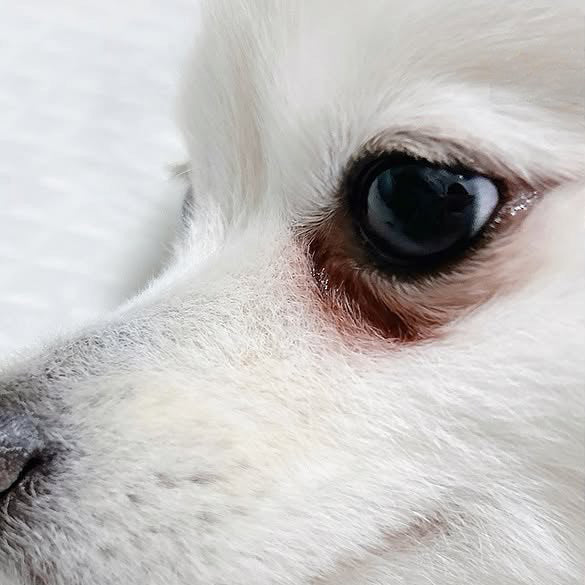
If your dog has a rust-colored mark running down from the inner corner of each eye, that color is porphyrin — and it is carried in the tears.
Here is what it is, why some dogs get it, when it is worth a vet visit, and what actually helps.
Same dog, thirty days apart
A Maltese, photographed on day 0 and again on day 30. One case — individual results vary, and staining driven by eyelid shape will not respond this way.

Day 0

Day 30
The short version
Tear staining is usually about drainage, not illness
Tears are meant to drain inward, from the eye into the nose. Staining starts when they spill over the lid and onto the face instead.
Most of the time that is the shape of the face, not a disease.
Porphyrin — an iron-rich molecule the body sheds when it breaks down old red blood cells
In tears, saliva and urine. Iron is why the mark is rust-colored, and why it darkens as it sits
Eyelid structure lets tears run over the lid instead of reaching the nasolacrimal duct
A short nose, a flat face, large eyes, pale fur, or a duct that formed differently from birth
The mark itself does not. Skin kept damp underneath can become sore
Not the stained hair — that pigment sits in the shaft. Only the hair that grows in next
She used to have tears stain, and I notice the stain is less.
What you are actually looking at
1. The mark itself
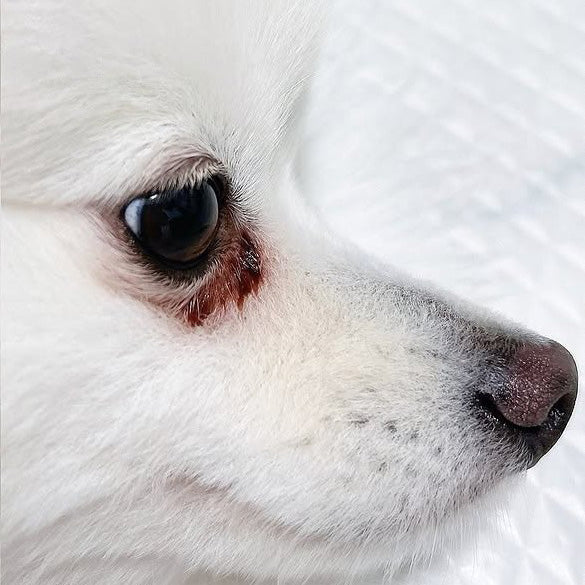
Reddish-brown, running from the inner corner of the eye down the muzzle. On a white coat it is the first thing you notice.
2. Why it matters
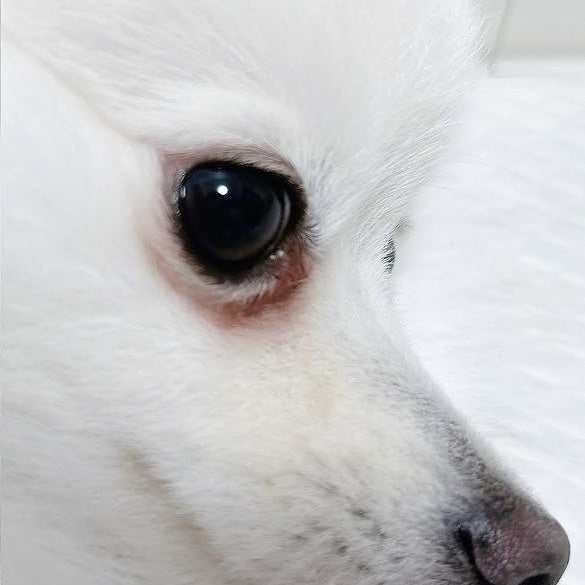
Three reasons, and only one is cosmetic. It can point to an underlying eye problem. Left damp and uncleaned, the skin underneath can get infected. And most owners simply do not like the look of it.

Easy to miss
On a dark coat, it hides
Cara is an Italian Greyhound with a gray coat, and the same reddish-brown sits at the inner corner of her eyes. On a white dog it would be the first thing you notice. On her, you have to look for it.
A dark coat does not mean there is no staining. It means it is easy to overlook — even when it is there.

What actually helps
There is no single method that works on every dog, and it usually takes some trial and error to find the one that suits yours.
- Rule out a medical cause first, particularly if the staining is new. If your vet finds something, follow their plan rather than treating it cosmetically.
- Keep the hair around the eyes trimmed short.
- Clean twice a day with a slightly damp cloth or cotton ball, and dry afterwards. Eye wipes and washes made for dogs are fine.
- Squinting, redness or pawing at the face are separate signs — those are worth a vet visit on their own.
Fur that is already stained stays stained. What you are changing is the hair that grows in next.

Support from within
MIRANEST is a daily jelly built on swiftlet’s nest. Its glyconutrients support healthy cell function, comfortable skin and normal shedding — working from the inside rather than on top of the coat.
Some owners who write to us about tear stains mention itching, redness or licking in the same breath — and describe them improving together, like the French Bulldog in the review below.
Roro, a Bichon, has hers as a reward after her daily brushing.
A second case
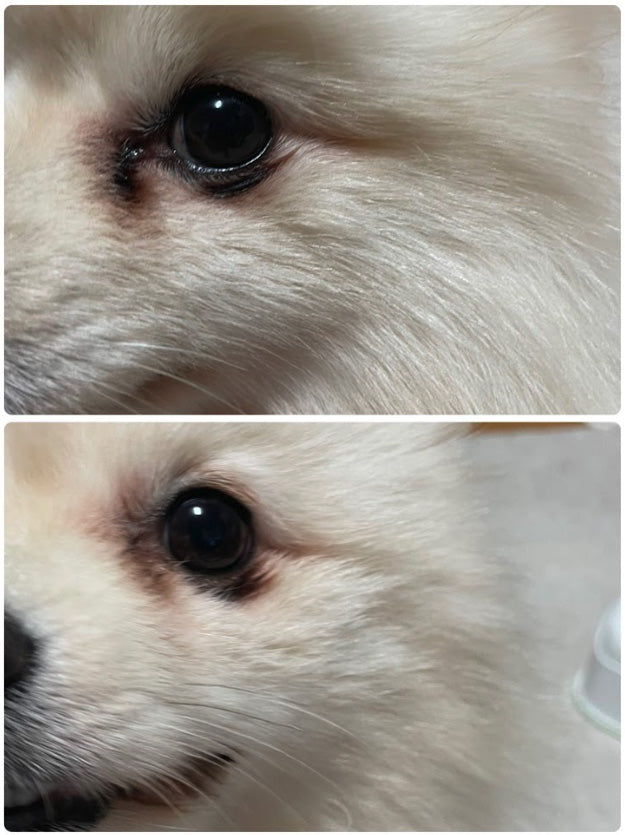
Reon, thirty-three days apart
A Pomeranian, photographed at the same corner of the same eye: day 0 on top, day 33 below. On day 0 there is a wet, dark build-up at the inner corner. By day 33 it is gone.
In his owner’s words, the tear stains “have become significantly lighter.” Pigment already in the hair stays put, so the change comes through with the hair growing in.
Read Reon’s storyFor two years, my French Bulldog struggled with tear stains, red, itchy paws and constant paw licking and nothing we tried made a difference. … By 30 days, her tear stains were gone, her paws were no longer red or irritated, and the constant licking had stopped.

MIRANEST Jelly Sticks
Learn More